


In a world where food is more abundant than ever, it’s paradoxical that most people suffer from a deficiency of one of the most important molecules for the brain and the heart — omega-3 fatty acids. For years, they were treated as a side note, a casual reminder that “it’s good to eat fish,” until science began to seriously examine what actually happens when these fats are missing.
Omega-3 deficiency doesn’t cause dramatic symptoms overnight. Instead, it acts as a silent, slow saboteur of health — influencing focus, mood, heart function, skin, hormones, and inflammatory processes. What makes them especially fascinating is that they work quietly, deeply, and gradually, yet over time they reshape the stability of the entire system.
If you want to understand how omega-3s work in synergy with other key nutrients, see the in-depth analysis
Vitamin D and Omega-3: Similarities, Differences, and When to Combine Them
Omega-3s are essential fatty acids, meaning the body cannot produce them on its own. There are three key forms:
DHA forms the foundation of neuronal membranes, keeping the brain flexible and resilient, while EPA is the body’s main tool for calming inflammation. When they work together, the body functions more calmly, clearly, and robustly.
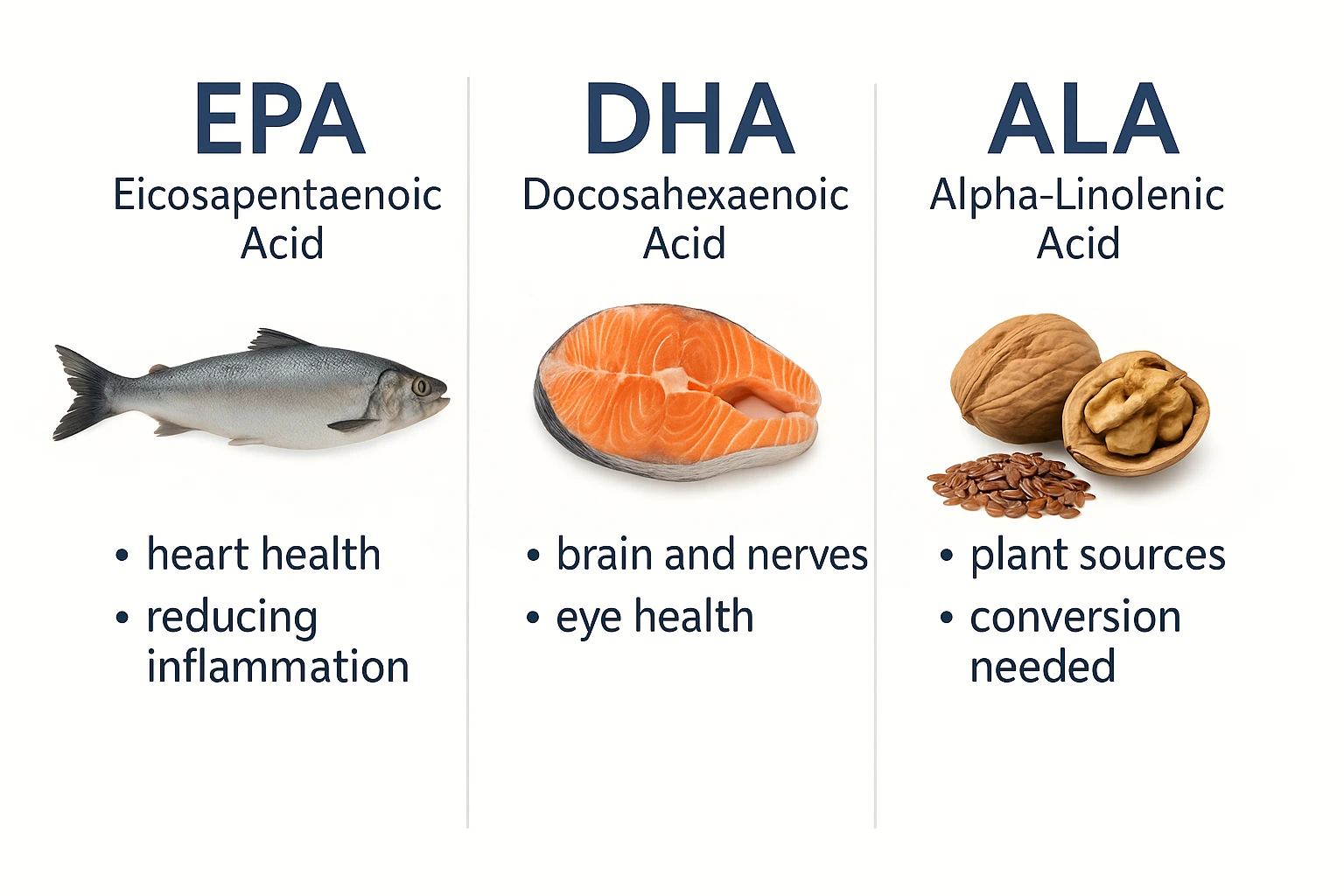
While supplements can be useful, the best way to obtain omega-3s is through foods rich in EPA and DHA, as these forms are directly incorporated into the brain, eyes, and heart.
Fatty fish are unmatched because they contain the highest levels of active omega-3s and relatively low mercury.
EPA + DHA per 100 g:
Practical recommendation:
2–3 servings of fatty fish per week cover most needs.

Plants provide ALA, which the body converts to EPA/DHA at only 1–5% efficiency.
Top plant sources:
They’re beneficial for general inflammation, but they do not replace DHA for the brain.
Algal oil is the only plant-based source that contains pure DHA + EPA.
It’s ideal for vegans and for pregnant women who avoid fish.
A large meta-analysis found that EPA can significantly reduce symptoms of depression, particularly in individuals with chronic inflammation. Improvements were not sudden, but gradual, as inflammatory markers decreased and chemical signaling in the brain stabilized.
In practice, this means: fewer mood swings, clearer thinking, and greater emotional resilience.
DHA makes up about 30% of the fat in the human brain, making it essential during pregnancy, childhood, and old age.
Studies show:
In other words — DHA is the architect of the brain.
Doses of 2–4 g of EPA + DHA per day can reduce triglycerides by up to 40%.
This is why pharmaceutical-grade omega-3s are used in metabolic syndrome therapy.
However, high doses also carry risk: an increased likelihood of atrial fibrillation — therefore only under medical supervision.
The neuronal membrane determines how quickly and accurately the brain processes information.
When DHA is sufficient, the membrane is flexible, stable, and highly conductive.
A similar stabilizing effect on the nervous system is seen with magnesium, which we cover in detail here:
Magnesium: How It Works, Who Really Needs It, and When It Can Be Dangerous.
When DHA is lacking, neuronal communication becomes slower and “noisier.”
Meanwhile, EPA reduces chemical brain noise, also known as neuroinflammation.
This is why many people notice:

If the label doesn’t specify the form, it’s almost certainly ethyl ester.
Many products contain 1000 mg of oil per capsule but only 200 mg of EPA/DHA.
That’s too weak for a real effect.
Fish oil that smells “fishy” is oxidized.
Look for:
Unlike many supplements I’ve tried, omega-3s produced a noticeable effect after a few weeks — not a sudden change, but a gentle system-wide alignment. Like straightening your posture and suddenly realizing your body moves more smoothly — except this time, it was happening in my head.
I noticed two subtle but clear signals:
My focus lasted longer — not as a burst of energy, but as steadiness, the ability to stay on one thought without constant distraction.
What fascinated me most was that omega-3s didn’t feel like they were “adding something,” but rather removing what was in the way: tension, reactive thinking, small energy blockages.
Not spectacular — but stable, quiet, and real.
Omega-3s are very safe, but they can:
If you are on anticoagulants or have cardiac arrhythmias, caution is advised.
When do they start working?
After 4–12 weeks.
Can you take too much?
Yes — more than 3 g of EPA+DHA increases bleeding and arrhythmia risk.
Do they help with ADHD?
DHA shows promising results in children with low omega-3 status.
Can they be combined with vitamin D?
Yes — and it’s recommended.
Omega-3s are not a trend — they are the molecular infrastructure of health.
They build the brain. Protect the heart. Regulate inflammation. Stabilize mood.
They don’t create dramatic overnight changes, but they deliver what matters most:
long-term stability, mental clarity, and resilience.
Examine.com – Omega-3
Harvard Nutrition – Omega-3 Overview
IFOS Database
Meta-analysis on Depression and EPA
DHA and Cognitive Health
Vitamin D and Omega-3: Similarities, Differences, and When to Combine Them
Magnesium: How It Works, Who Really Needs It, and When It Can Be Dangerous
Ashwagandha: Everything You Need to Know About This Powerful Adaptogen
This article is for informational and educational purposes only. It is not medical advice and does not replace professional diagnosis or treatment. If you have a medical condition or take medication, consult a healthcare professional before using dietary supplements.
All Rights Reserved © 2025